
Designing Intelligent Physical Systems
Epsilon Photonics is an advanced optics and wave-based engineering company headquartered in Rochester, New York, with facilities in San Jose–Santa Clara, California, Cambridge, Massachusetts, and Montréal, Québec — four globally recognized centers for photonics, semiconductor technologies, and advanced physical system engineering.
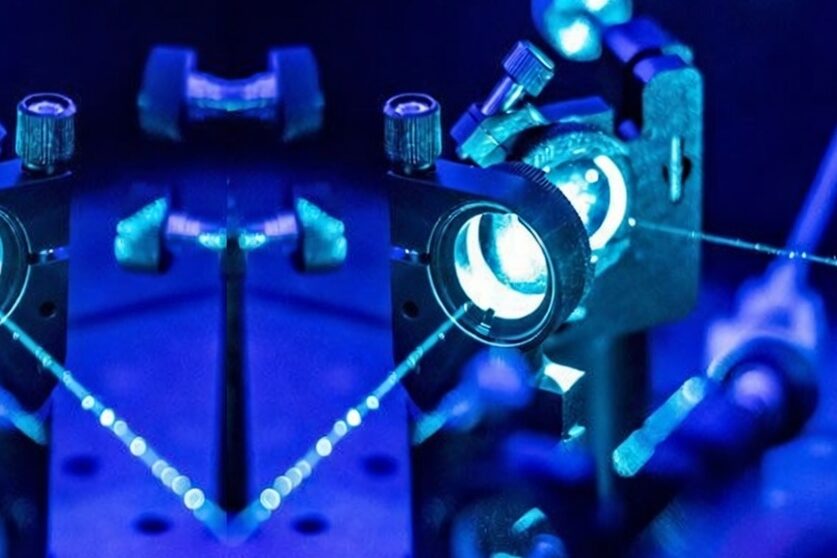
We specialize in the design, modeling, and development of intelligent physical systems spanning photonics, ultrasonics, piezoelectric technologies, advanced functional materials, and AI-driven inverse design. Our work integrates physics, geometry, materials science, and manufacturability into a unified engineering framework, enabling systems that are simultaneously high-performance, reliable, and scalable.
Backed by multidisciplinary expertise in optical systems, acoustic devices, electromechanical architectures, and materials engineering, Epsilon Photonics partners with organizations developing next-generation sensing platforms, precision instrumentation, semiconductor technologies, medical devices, industrial systems, and high-reliability technologies designed for demanding operational environments.
Rather than treating optics, materials, and manufacturing as isolated phases, we approach every program as a continuous design space where performance, robustness, and production realities co-evolve.
Epsilon Photonics does not operate as a component supplier or simulation vendor.
We engineer systems designed to function in the real world.
We design intelligent physical systems—from materials to manufacturing—by treating optics, acoustics, and electromechanics as a single continuous design space. Our work spans photonic systems, ultrasonic and piezoelectric devices, advanced functional materials, AI-driven inverse design, and manufacturability-aware production. We do not sell catalogs. We build systems that work in the real world.
Why the Industry Needed a Different Kind of Company
As devices grew smaller, faster, hotter, and more integrated, traditional design workflows stopped scaling. Teams optimized individual components only to discover late-stage failures: bandwidth shortfalls, thermal drift, mechanical fatigue, yield collapse, or impossible tolerances. These failures were not due to poor engineering—they were due to fragmented thinking.
The core issue is structural. Physical systems do not fail in isolation. They fail at interfaces: between material and geometry, between physics and manufacturing, between performance targets and real-world constraints. Solving those problems requires more than incremental improvements. It requires a different way of modeling reality.
Epsilon Photonics was built around that insight.
From the beginning, we organized the company around systems-level design, not product categories. We unified photonics, ultrasonics, piezoelectric materials, and manufacturing into a single computational and engineering framework. That framework allows us to design devices that are not only high-performance, but also buildable, reliable, and scalable.
A Systems-First Philosophy
At Epsilon Photonics, we approach every program as a system—not a part, not a material, not a simulation.
A system has shape. It has boundaries. It has tradeoffs. You can stretch or optimize a system locally, but if the underlying structure is wrong, no amount of tuning will fix it. This principle applies equally to optical systems, ultrasonic transducers, piezoelectric sensors, and manufacturing processes.
Our work begins by identifying the true design space of a problem. That includes physics, materials, geometry, environmental conditions, electronics, and production realities. We then model that space continuously, allowing performance and manufacturability to co-evolve rather than compete.
This systems-first approach is what allows Epsilon Photonics to solve problems others avoid: harsh environments, high temperatures, high pressures, wide bandwidth requirements, extreme miniaturization, and long-lifetime reliability.
Bridging Photonics, Acoustics, and Materials
Most companies specialize. Epsilon Photonics integrates.
Photonics and ultrasonics share more than the industry admits. Both are wave-based systems governed by geometry, impedance, boundary conditions, and material behavi
or. Piezoelectric materials sit directly at that intersection, converting mechanical energy into electrical signals and back again.
By treating these domains as expressions of the same underlying physics, we unlock design freedoms that siloed approaches miss. Optical waveguides and acoustic wave propagation can be co-designed. Piezoelectric composites can be tuned alongside geometry. Mechanical constraints can be addressed before they become failure modes.
This integration allows us to develop hybrid photonic-acoustic systems, advanced sensing platforms, and high-performance transducers that outperform traditional designs while remaining manufacturable.
Advanced Materials as a Design Variable, Not a Constraint
Materials are often treated as fixed inputs. At Epsilon Photonics, they are design variables.
We engineer and deploy advanced functional materials—including piezoelectric ceramics, PZT families, bismuth titanate, lead metaniobate, lead titanate, and custom composite architectures—to meet specific performance, environmental, and lifetime requirements. We understand how material properties interact with geometry, frequency, temperature, and mechanical stress.
More importantly, we understand that material selection is inseparable from system design. A material that looks ideal on a datasheet may introduce loss, drift, or manufacturability issues when deployed at scale. Our process explicitly models those interactions early, reducing risk and accelerating development timelines.
AI-Driven Inverse Design and Multiphysics Modeling
As physical systems grow more complex, intuition alone no longer scales. Epsilon Photonics applies AI-driven inverse design and multiphysics simulation to explore design spaces that would otherwise be inaccessible.
Inverse design allows us to begin with system-level objectives—bandwidth, sensitivity, thermal stability, lifetime, manufacturability—and work backward to discover geometries, materials, and architectures that satisfy those constraints simultaneously. This approach reveals non-obvious solutions that traditional optimization misses.
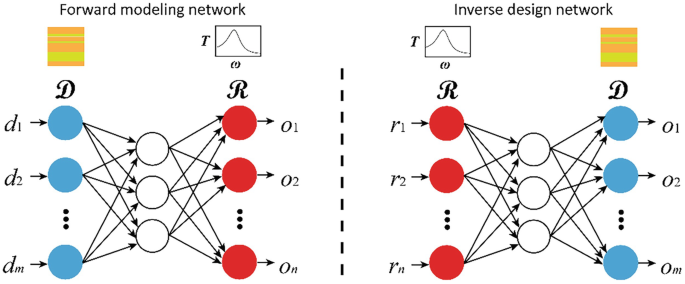
Our modeling spans optical, acoustic, mechanical, thermal, and electrical domains. We analyze sensitivity, tolerance, uncertainty, and robustness as first-class variables. The result is not just a design that works on paper, but one that survives manufacturing variation and real-world deployment.
Designing for Manufacturability From Day One
Many advanced designs fail not because they are poorly conceived, but because manufacturing was considered too late.
At Epsilon Photonics, manufacturing is embedded in the design process from the beginning. We design with real tolerances, real processes, and real yield considerations in mind. Our team has deep experience in ceramic processing, dicing, bonding, composite fabrication, wafer-scale manufacturing, and precision assembly.
This manufacturability-aware approach allows us to deliver systems that transition smoothly from prototype to production. It also enables us to support multiple engagement models—from custom development and build-to-performance programs to contract manufacturing and next-higher assemblies.
Operating in Harsh and Demanding Environments
Many of the most valuable applications for photonic and ultrasonic systems exist in environments that are hostile to delicate devices: extreme temperatures, high pressures, corrosive media, high shock, and continuous vibration.
Epsilon Photonics specializes in these environments.
We design systems capable of continuous operation at elevated temperatures, under extreme pressure, and across long operational lifetimes. Our experience spans medical devices, industrial automation, energy, oil and gas, aerospace, defense, marine systems, and advanced research instrumentation.
By addressing environmental constraints as fundamental design inputs—not afterthoughts—we deliver solutions that maintain performance where others degrade or fail.
Serving High-Impact Industries
Epsilon Photonics works with organizations that operate at the edge of what is physically possible. Our partners include companies and institutions in:
- Medical devices and therapeutic systems
- Semiconductor and advanced manufacturing
- Defense and aerospace
- Energy, oil, gas, and geothermal
- Industrial automation and robotics
- Quantum sensing and precision instrumentation
Across these industries, the challenges are different—but the underlying need is the same: systems that perform reliably, scale predictably, and survive real operating conditions.
A Collaborative Development Model
We do not believe in black-box engineering. Epsilon Photonics works as a true technical partner, integrating with our customers’ teams to define requirements, explore tradeoffs, and converge on optimal solutions.
Our engagement models are flexible by design. We support early-stage concept development, detailed system engineering, prototyping, manufacturing scale-up, and long-term production. In each case, our goal is the same: reduce risk, shorten timelines, and deliver systems that meet both technical and commercial objectives.
Built for the Long Term
Epsilon Photonics was not built to chase trends. It was built to endure.
The technologies we work on—photonics, ultrasonics, piezoelectric materials, AI-driven design—are foundational. They underpin sensing, communication, energy, medicine, and automation. As these fields evolve, the need for integrated, systems-level thinking will only grow.
Our company is structured to evolve with that reality. We invest in deep technical expertise, robust modeling frameworks, and manufacturing capabilities that scale. We design for reliability not only in devices, but in partnerships.
Our Commitment to Quality and Responsibility
Precision engineering demands discipline. Epsilon Photonics operates with rigorous quality standards and a strong commitment to safety, reliability, and environmental responsibility. We design systems that last, because longevity reduces waste, lowers total lifecycle cost, and improves outcomes for our partners.
We believe that sustainable engineering is not a constraint on innovation—it is a prerequisite for it.
Looking Forward
The boundary between physical systems and intelligent design is dissolving. As AI, materials science, and manufacturing continue to converge, the companies that succeed will be those that understand the shape of the whole system, not just its parts.
Epsilon Photonics exists to lead in that future.
We design intelligent physical systems where optics, acoustics, materials, and manufacturing converge. We help our partners move faster, build smarter, and deploy technologies that perform where it matters most.
Conclusion
Epsilon Photonics is not a catalog supplier, a simulation vendor, or a contract manufacturer. We are a systems engineering company built for the complexity of modern physical technology.
By unifying photonics, ultrasonics, piezoelectric materials, AI-driven design, and manufacturability into a single framework, we deliver solutions that others cannot. Our work turns complexity into structure, uncertainty into insight, and ideas into reliable, scalable systems.
That is not a slogan. It is how we operate.
And it is why Epsilon Photonics exists.